Airports are no longer simply places where passengers wait for a flight. Modern terminals combine transportation, retail, dining, advertising, architecture, and digital experiences in one large public space.
This creates new opportunities for creative LED displays.
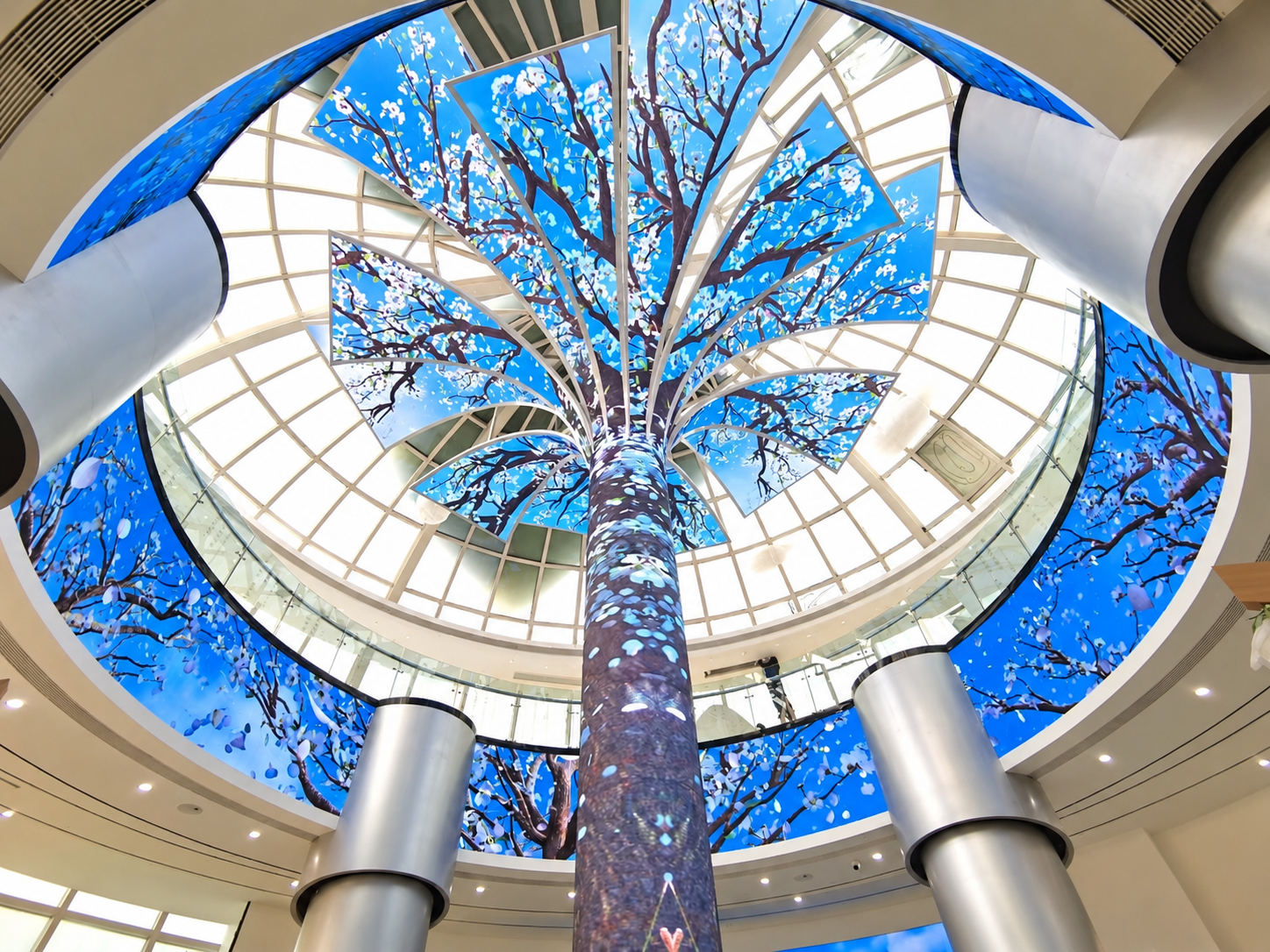
Instead of placing rectangular screens on every wall, airport designers can integrate LED displays into columns, ceilings, curved walls, central atriums, and other architectural structures. A screen can provide useful information while also becoming part of the terminal design.
The important question is not simply where to install an LED screen. It is which type of creative LED display works best for each airport space.
The entrance and departure hall are often the first large indoor spaces passengers see.
A large curved or custom-shaped LED display can turn this area into a strong visual entrance. It can show destination videos, airport branding, local landmarks, seasonal campaigns, and commercial advertising.
Unlike a conventional flat video wall, a curved LED installation can follow the shape of an interior wall or architectural structure. This makes the display feel like part of the terminal instead of an additional screen attached to it.
For large entrance areas, viewing distance should be considered when choosing pixel pitch and screen size. There is little value in selecting an extremely fine pixel pitch when most passengers will view the screen from far away.
Check-in halls are busy spaces. Passengers are moving between entrances, airline counters, self-service kiosks, and security areas.
LED displays here need to be attractive without making the space confusing.
Wide LED walls can be installed above or behind check-in counters to display airline branding, destination content, announcements, and commercial media. If the terminal contains curved walls, designers can also use a custom-shaped LED screen to follow the building structure.
The content should remain simple. Large text, recognizable graphics, and short messages work better than complicated advertisements in high-traffic areas.
Large airport atriums provide one of the best locations for creative LED technology.
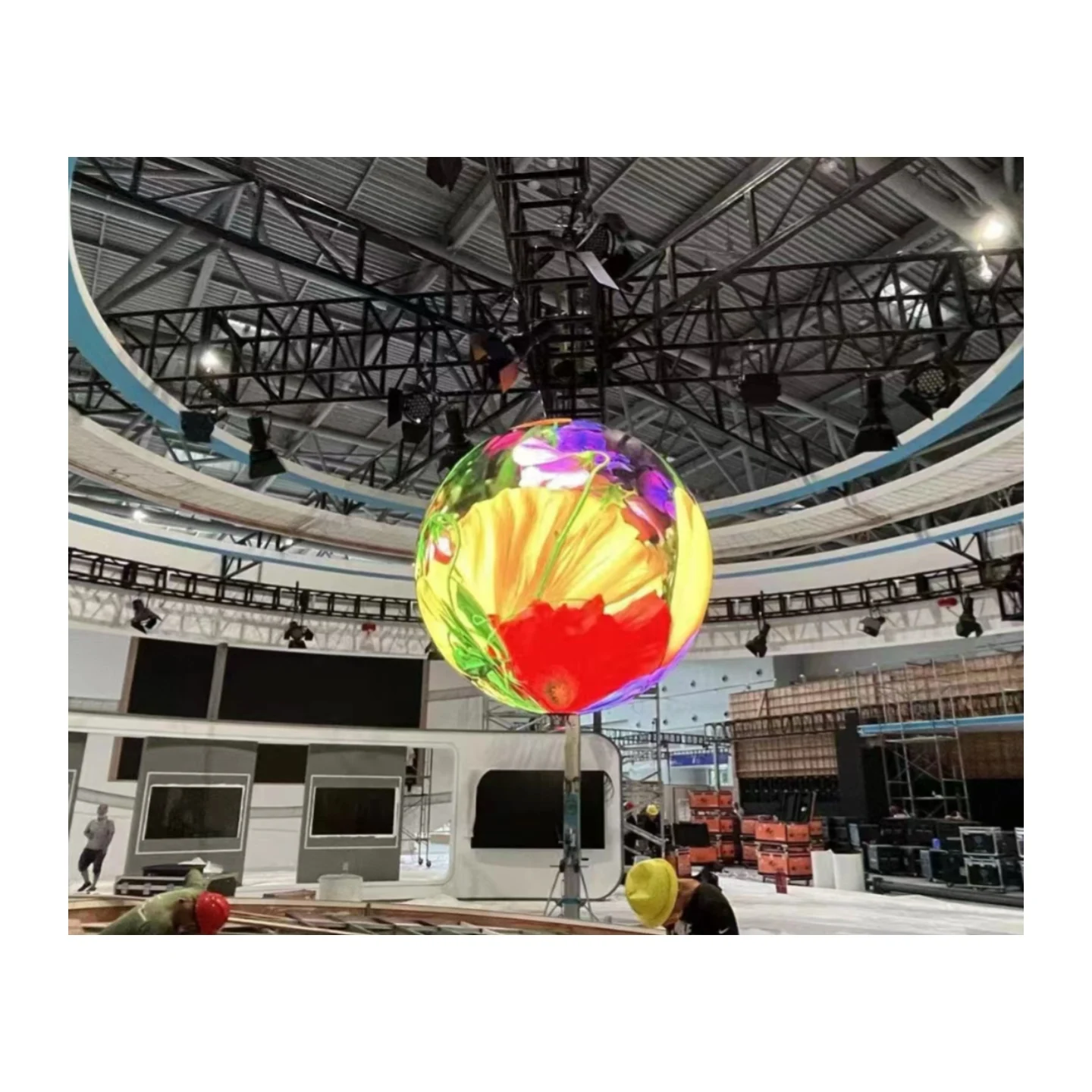
A spherical LED display can be installed as a floor-mounted centerpiece or suspended above an open area. Because the display surface extends around the sphere, passengers approaching from different directions can see the content.
This is useful in a terminal where pedestrian traffic rarely comes from only one direction.
A sphere can show a rotating globe, destination maps, abstract animations, cultural content, airline campaigns, or branded visuals. Instead of competing with the architecture, the display itself becomes a recognizable landmark.
AILED's spherical LED displays are available in different diameters and pixel pitches, making it possible to customize the screen according to the terminal size, viewing distance, and installation structure.
Columns are everywhere in large airport terminals, but they are often difficult spaces for traditional rectangular screens.
Creative LED technology offers another option.
A cylindrical or flexible LED display can wrap around a structural column and turn it into a 360-degree digital surface. Instead of occupying additional floor or wall space, the display uses a structure that already exists.
These screens are particularly useful near retail zones, departure lounges, passenger corridors, and duty-free areas.
Content can include brand campaigns, directional graphics, destination visuals, or short animated messages. When several columns are located in the same area, synchronized content can create an even stronger visual effect.
Airport retail areas compete heavily for passenger attention.
Here, LED displays do not always need to be large. Their shape and position may be more important.
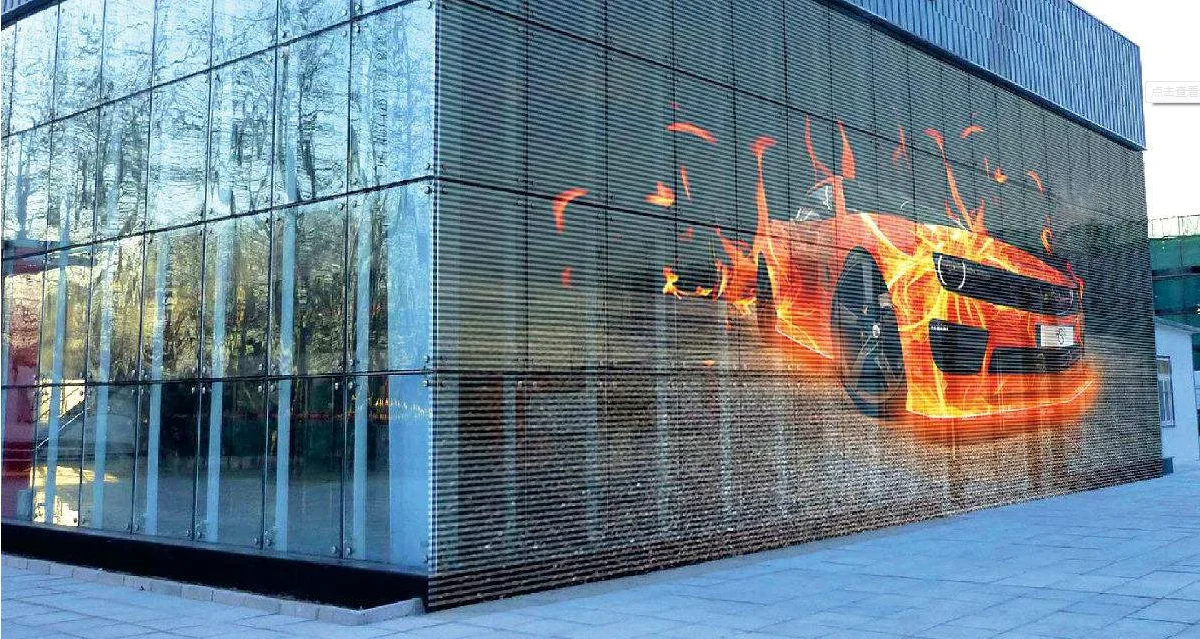
Flexible and custom LED modules can create curves, waves, circles, or other structures around shop entrances and product displays. For example, an LED screen can follow the curve of a storefront instead of forcing the store design to fit a rectangular video wall.
This gives architects and retailers more freedom when planning premium stores, duty-free areas, restaurants, and brand experience zones.
Passengers often spend several minutes waiting in baggage claim areas, making these spaces suitable for digital media.
Long LED displays can be installed above baggage belts, while curved or wraparound screens can fit columns and circular architectural structures nearby.
The content can switch between baggage information, transportation guidance, local tourism, hotel advertising, and commercial campaigns.
Because passengers may remain in this area longer than in a corridor, content can be slightly more detailed. However, important information should still be clear and easy to understand from a distance.
Creative shapes bring more design freedom, but they also require more planning than a standard flat LED wall.
Before production begins, the project team should confirm the installation dimensions, viewing distance, pixel pitch, screen brightness, structural load, power supply, ventilation, signal routing, and maintenance access.
Content mapping is another important point.
A video designed for a flat rectangle cannot always be placed directly onto a sphere, cylinder, or irregular surface. The content should be prepared for the actual screen geometry so that text, logos, and important visual elements do not become distorted.
Maintenance should also be considered during the structural design stage. Technicians need practical access to power supplies, receiving cards, modules, and cables after the screen is installed.
There is no single LED design that works for every part of a terminal.
Entrance halls may benefit from large curved displays. Central atriums can use spherical or suspended screens as visual landmarks. Structural columns can become cylindrical digital surfaces, while retail areas can use flexible LED modules to match store architecture.
The best solution begins with the space rather than the screen.
By considering passenger movement, viewing direction, architecture, content, installation, and maintenance from the beginning, creative LED displays can become a natural part of an airport terminal instead of simply another advertising screen.
Custom-Shaped LED Screen → https://www.aileddisplay.com/custom-shaped-led-screen
AILED provides spherical and custom-shaped LED display solutions for different commercial and architectural applications. For a customized airport LED project, screen dimensions, pixel pitch, installation method, and display shape can be designed according to the actual terminal environment.
 Hot News
2026-10-21
2026-10-20
2026-10-19
Copyright © 2025 by Shenzhen Aishang Display Technology Co., Ltd - Privacy policy
 EN
EN